
Managing cyber, physical, and human capital risks separately leaves your organization exposed and slows your response to threats. Siloed approaches create gaps that criminals and insiders can exploit. You need integrated risk management that reduces loss, speeds incident response, and strengthens your culture—all while simplifying compliance. Learn how converged security creates organizational resilience and why Apogee Global RMS is the trusted partner to build and run your unified risk program. For more insights on convergence, check this article.
The Case for Integrated Risk Management
Managing risks separately is like trying to control a storm without seeing the entire weather map. You’re left guessing, and that leaves your organization vulnerable. Let’s explore why breaking down silos is crucial.
Breaking Down Risk Silos
When risks are managed separately, gaps form. These gaps are ripe for exploitation. Imagine your cyber team, physical security, and HR working in isolation. They might miss the bigger picture. By integrating these areas, you close gaps and create a more secure environment. A unified approach ensures all parts of your organization are communicating and working together, making it harder for threats to slip through the cracks.
The Benefits of Converged Security
Think of converged security as a puzzle where all pieces fit perfectly. When cyber and physical security work together, you get stronger protection. This approach reduces risks and boosts response times. For example, if a breach occurs, teams can act swiftly, using combined knowledge and resources. The longer you wait to integrate, the more you’re at risk. Explore more on the benefits of a unified approach.
Building Organizational Resilience
An organization that’s resilient can withstand and recover from threats quickly. By integrating risk management, you not only protect assets but also strengthen your internal culture. This approach encourages a proactive rather than reactive mindset. Employees become part of the solution, working together to identify and mitigate potential threats before they occur.
Components of Unified Risk Strategy
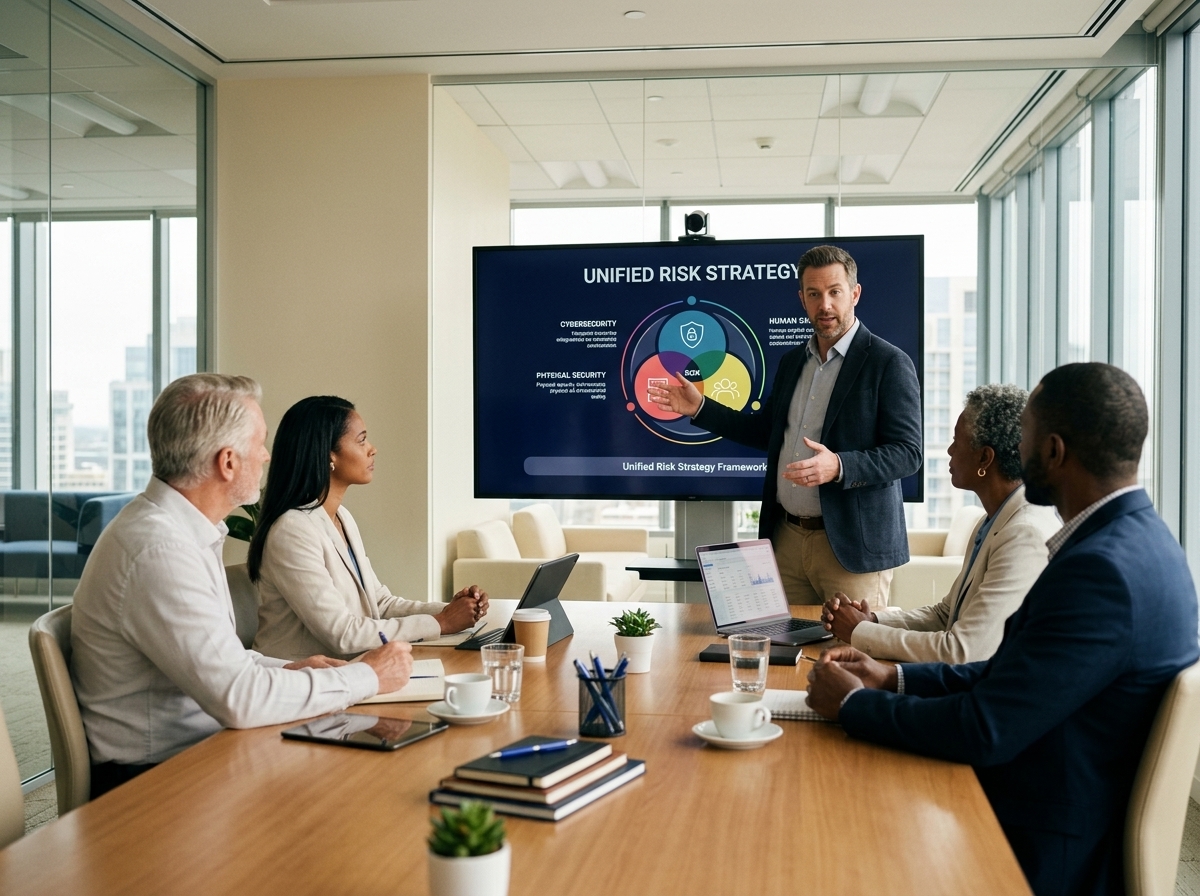
To build a strong defense, understanding key components of a unified strategy is essential. Let’s dive deeper into these components.
Cyber Physical Convergence
Imagine your cyber and physical security teams as superheroes joining forces. Each has unique strengths, but together, they’re unstoppable. Cyber physical convergence means these teams share insights and data, creating a holistic security strategy. This unified view makes it easier to spot vulnerabilities and coordinate responses. Learn more about this convergence in this insightful article.
Human Capital Risk and Leadership Development
Your people are your greatest asset—and your weakest link if not managed well. Leadership development helps mitigate human capital risks. By empowering leaders, you build a culture of security. Leaders who are trained to recognize and respond to risks can guide their teams effectively. They inspire a culture where everyone is vigilant and informed.
Talent Advisory and Workforce Resilience
Having the right people in the right roles is crucial. Talent advisory ensures you have a workforce that can adapt and respond to threats. Workforce resilience isn’t just about surviving a crisis; it’s about thriving afterward. A resilient team rebounds quickly, learning and growing from each challenge.
Crafting an Integrated Risk Program

Now, let’s put these components together and craft a program that truly integrates risk management.
Conducting a Comprehensive Risk Assessment
A risk assessment is like a health check for your organization. It identifies vulnerabilities and prioritizes actions. Start by evaluating current processes and identifying gaps. An effective assessment considers all aspects: cyber, physical, and human. Regular check-ups ensure you’re prepared for new threats.
Incident Response Planning and AI Governance
When an incident occurs, how fast you respond can make all the difference. An incident response plan outlines steps to take, ensuring a swift reaction. Incorporating AI governance helps automate responses, making them quicker and more efficient. This enhances your ability to manage and mitigate risks effectively.
Data Privacy Compliance and Security Program Development
Compliance isn’t just a box to check; it’s crucial for trust and protection. Develop a security program that aligns with data privacy laws like HIPAA and NIST CSF. A robust program safeguards sensitive information and ensures regulatory compliance. This proactive stance protects your organization and its reputation.
By unifying cyber, physical, and human capital risks, you can build a more resilient, secure, and efficient organization. The longer you manage risks in silos, the more you’re exposed to threats. Now’s the time to integrate and protect your future.
