
Lead to Secure: How Leadership Development Powers Cybersecurity and Organizational Resilience
Leadership development is often seen as a people issue, but it directly impacts your cybersecurity posture and organizational resilience. Weak leadership creates gaps that cyber threats exploit, while strong leadership builds a security culture that withstands attacks. This post reveals how your leadership capability shapes cyber outcomes and why Apogee’s integrated cyber–leadership–talent model offers a clear path to stronger defenses. Keep reading to see how aligning risk and leadership can protect your mission-critical assets. For further insights, you can explore this article.
Leadership Development in Cybersecurity
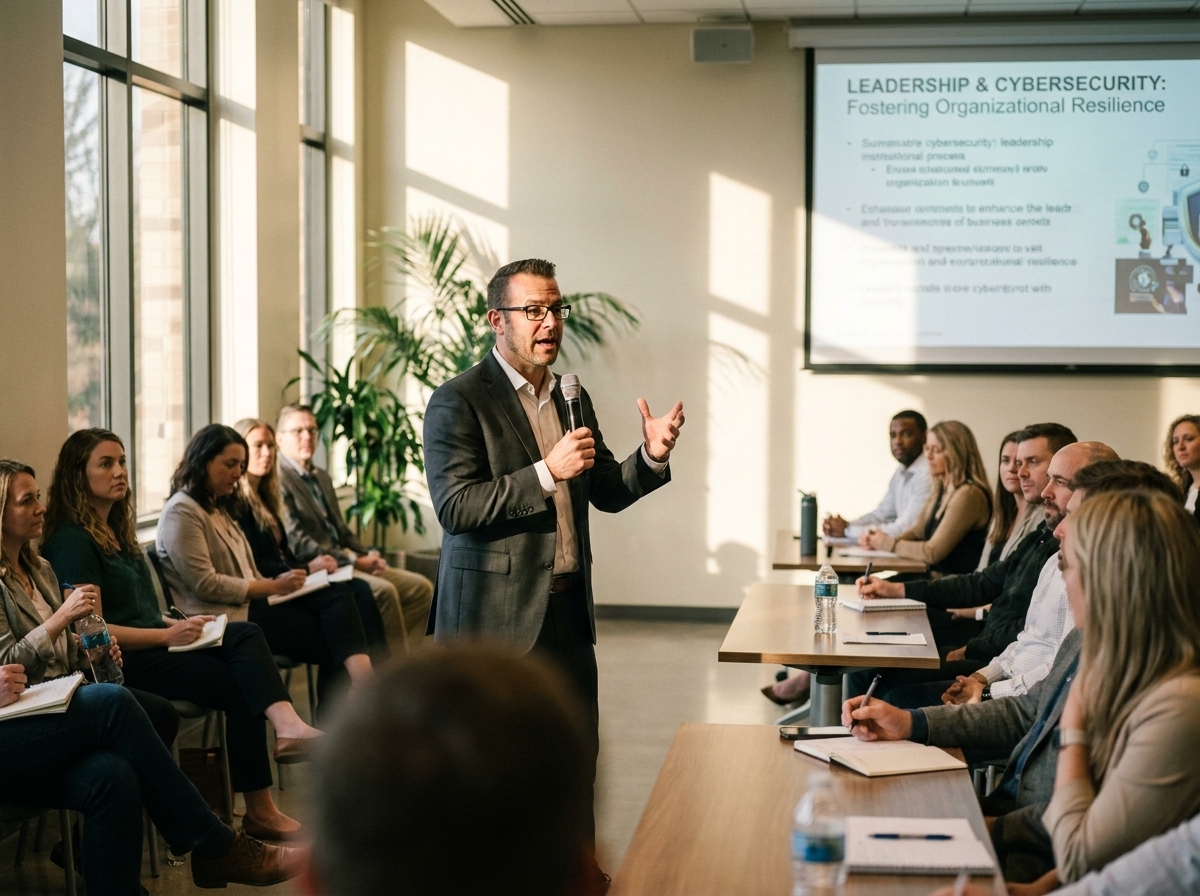
In the digital age, leadership is crucial in protecting your organization’s assets. Let’s explore how strong leaders can strengthen your cybersecurity defenses.
Building Cybersecurity Leadership
Great leaders in cybersecurity don’t just react—they anticipate. They understand that threats evolve and that proactive strategies are necessary. These leaders inspire teams to stay informed and vigilant. By fostering continuous learning, they ensure everyone is prepared for potential threats. A key insight: when leaders prioritize cybersecurity, it becomes a shared mission, not just an IT task.
Most organizations believe that technology alone can guard against cyber threats. The truth? It’s the people behind the technology that make the difference. Strong leadership bridges the gap between tools and strategy, ensuring every team member knows their role in protecting data.
Executive Coaching for CISOs
CISOs face unique challenges. They need to balance security with business objectives, often under immense pressure. This is where executive coaching comes in. Coaching helps CISOs enhance their strategic thinking, enabling them to communicate effectively with both technical teams and executives.
A well-coached CISO can transform security from a cost center to a strategic advantage. They learn to frame cybersecurity as a business enabler, fostering collaboration across departments. This shift not only strengthens security but also aligns it with organizational goals.
Human Capital Risk in Security
Human capital is often the weakest link in cybersecurity. Training alone isn’t enough. You need a culture that values security at every level. Leadership development addresses this by instilling a security-first mindset. Leaders educate teams on the importance of vigilance and the impact of human error.
Consider this: a company suffered a breach because an employee clicked a phishing link. The solution wasn’t more tech—but better awareness. By developing leaders who prioritize human capital risk, organizations minimize vulnerabilities and enhance overall security.
Enhancing Organizational Resilience

The strength of your organization goes beyond technology. It’s built on strategies that prepare and protect against threats, ensuring continuity and success.
Cyber Resilience Strategies
Resilient organizations anticipate disruptions. They have strategies in place to respond effectively to cyber incidents. These strategies include regular risk assessments and incident response planning. A proactive approach ensures your organization isn’t caught off guard when threats arise.
Most think resilience is about bouncing back quickly. While that’s part of it, true resilience involves learning from each incident to prevent future ones. By adopting a learning culture, your organization can improve continuously.
Developing Security Culture
A strong security culture isn’t just about policies. It’s about people understanding their role in protecting the business. Leaders set the tone, emphasizing that security is everyone’s responsibility. By fostering open communication, you can discover potential threats before they become breaches.
Most employees believe security is solely IT’s job. However, when leaders actively involve all departments, security becomes embedded in daily operations. This inclusive approach creates a vigilant workforce.
Risk Management Frameworks
Risk management frameworks provide a structured approach to identifying and mitigating threats. They ensure your organization meets regulatory requirements, like NIST CSF, HIPAA compliance, and more. These frameworks help align security efforts with business objectives, ensuring comprehensive protection.
Organizations often see frameworks as cumbersome. Yet, when implemented effectively, they streamline processes and enhance security posture. It’s about finding the balance between compliance and practicality.
Integrated Risk Solutions

Integrated solutions address not only cybersecurity but also how it intersects with physical security and data privacy. This holistic approach is key to modern risk management.
NIST CSF and Compliance
Compliance isn’t just about avoiding fines. It’s about demonstrating your commitment to security. The NIST CSF provides guidelines that help protect critical infrastructure. Adhering to these standards reassures stakeholders that your organization takes security seriously.
Most think compliance is a one-time effort. In reality, it’s an ongoing process. Constantly updating and refining your frameworks ensures you stay ahead of emerging threats.
AI Governance and Data Privacy
With AI’s growing role in business, governance becomes crucial. Leaders must ensure AI systems are secure and that data is handled responsibly. Effective governance builds trust and protects your organization’s reputation.
Many focus solely on AI’s capabilities. However, without proper oversight, AI can introduce new risks. It’s vital to manage AI with the same rigor as other business processes.
Converged Cyber-Physical Security
In today’s interconnected world, physical and cyber threats often overlap. Converged security addresses both, ensuring comprehensive protection. By integrating these efforts, you create a unified defense strategy.
Some believe physical and cyber threats are separate. In truth, they are intertwined. A security breach could start as a physical intrusion and escalate to a cyber incident. Addressing both ensures robust defenses.
In conclusion, leadership development is a powerful tool in bolstering cybersecurity and organizational resilience. By investing in strong leaders, you equip your organization to face any challenge. Remember, the longer you wait to strengthen leadership, the more vulnerable you become. Protect your assets by prioritizing leadership today.
